Prince Edward County, Ontario, Canada
Marsh Monitoring Program
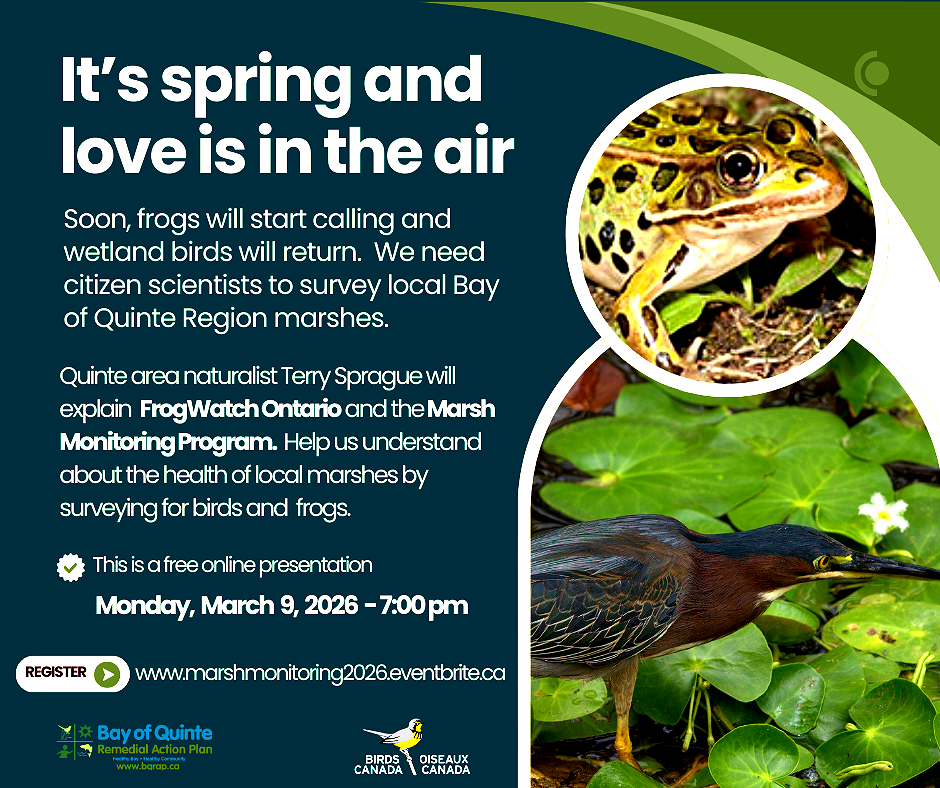
| Soon, frogs will start calling looking for mates and wetland birds will return to their favourite marsh to stake out territory for another year. You can participate in this springtime ritual by volunteering as a citizen scientist. Every year, the Bay of Quinte Remedial Action Plan (BQRAP) needs volunteer citizen scientists to survey local marshes to collect data on wetland birds and frogs. The survey information helps track long-term trends in species diversity, and abundance. An information session is hosted by Quinte area naturalist and columnist Terry Sprague explaining how you can become involved in surveying local inland and coastal marshes through the FrogWatch Ontario and Marsh Monitoring programs. This year, the virtual presentation is on Monday, March 9th, 2026 at 7:00 pm. You can register on Eventbrite at https://marshmonitoring2026.eventbrite.ca to receive the presentation link. Terry will discuss both programs, the FrogWatch Ontario program, is a family-friendly activity; and the Marsh Monitoring Program, is more structured, ideal for the outdoors enthusiast. The FrogWatch Ontario Program records amphibians once a week from April through June and the results are submitted online. The Marsh Monitoring Program records wetland birds and frogs, between May and July. Frogs are monitored three times approximately 15 days apart. Wetland birds are monitored twice for 15 minutes, and the monitoring must be at least 10 days apart. Monitoring sites are at a variety of locations like cottages, backyards, or designated monitoring locations. “The information collected tells us about the presence and abundance of both species in coastal and inland marshes and contributes to our understanding of these species and their habitat needs.” says Terry. In the Bay of Quinte, the environmental challenges related to fish and wildlife populations and habitat are classified as restored, meaning they have met all the criteria outlined in the bay’s Remedial Action Plan. That’s it. It doesn’t mean they are protected from the effects of climate change, population increases, and urban and rural development. Citizen scientists are vitally important as “boots on the ground” focusing on ensuring marshes don’t revert to the conditions that required a Remedial Action Plan in the first place. This presentation gives you an excellent overview of the two programs and support is offered to all volunteers throughout the monitoring season. Registration closes on Monday, March 9th at 3:00 pm. then the link for the presentation will be sent to attendees. For information on this evening presentation. smidlanejones@bqrap.ca 613-394-3915 ext. 214 www.bqrap.ca |