Prince Edward County, Ontario, Canada
What Birds Can We Expect To See In July?
This is the time of the year when we wonder where the year has disappeared as some birds are already beginning to show signs of wanting to migrate south.
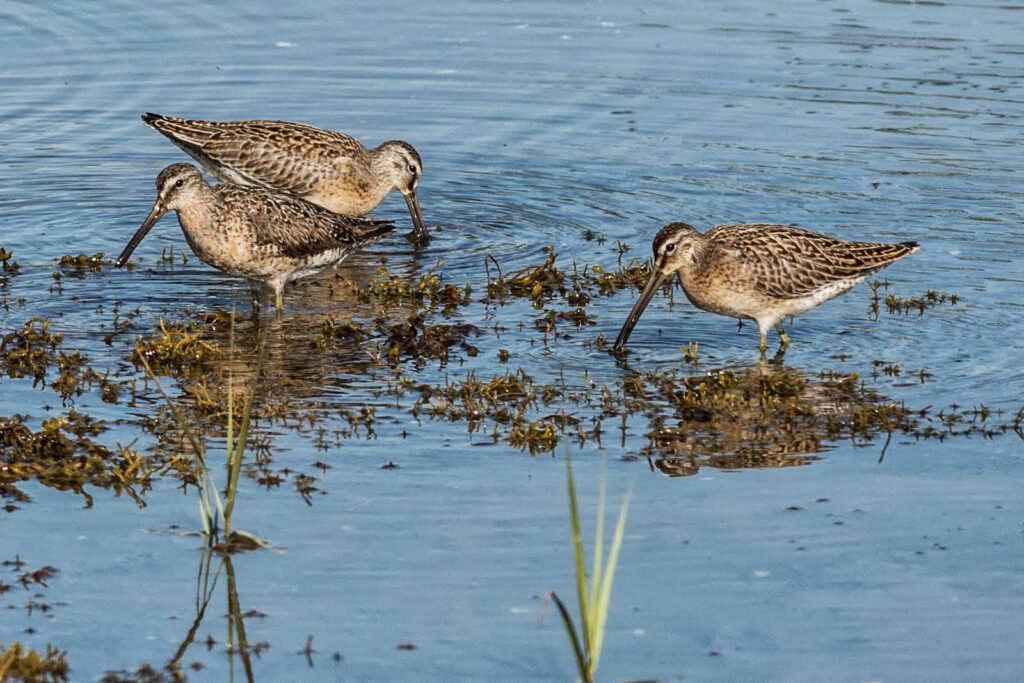
As early as even late June, we can expect to see returning shorebirds beginning to arrive from their Arctic nesting grounds. By early July, up to ten or so species of shorebirds can be expected to appear on the beaches at prime shorebird locations like Presqu’ile Park, leaving many observers to wonder who was going south, and who was still going north! Indeed, some birds are passing through in July, namely shorebirds, beginning with LEAST SANDPIPERS and LESSER YELLOWLEGS and then gaining momentum with the first SOLITARY SANDPIPERS and SHORT-BILLED DOWITCHERS of the fall season as they start leaving their northern breeding grounds. UPLAND SANDPIPERS are also beginning to collect by the latter part of the month, but look for them in dry pasture fields. Surprises in the shorebird migration can occur, however.
It seems like only a few weeks ago when the first BOBOLINKS were heard pouring out their rollicking song over the meadows upon their spring arrival; yet, this species is also migrating by late July and early August and numbers of them may be heard passing over later this month. Until then, BOBOLINKS will still be present in open meadows and hay fields and some will still be carrying food to young as late as mid-July, and numbers of them, likely populations from farther north, will continue passing through next month.
In the woods, the plaintive calls of the EASTERN WOOD-PEWEE continue to filter through the foliage despite the hot, sultry days of July, while up in the tree tops the monotonous robin-like phrases of the RED-EYED VIREO add a bit of bird song to an otherwise quiet woods. One sings daily from the tall Silver Maples on my two-acre backyard, which is a clear sign that my late wife and I were successful in transforming our once barren hay field and former barnyard over a span of 50+ years into a bird friendly setting. Now and again, we will hear the chanting crescendo of the OVENBIRD, or the rich phrases of the WOOD THRUSH. The best time to hear these, and other birds, of course, is first thing in the morning, before the heat builds up and birds retire to the cool of the woods. The early bird gets the worm has never been truer, especially at this time of the year. Normally, a few days in July can be extremely humid, and it is always great to hear this dawn chorus of birds, which soon fades away, once the temperatures start to soar by 8:00 a.m. For those keen on trying the early morning bird walk, the sun rises early this month by 5:30 a.m. (although it’s light enough to walk by 5:15 a.m.), and will rise progressively later as the month advances, rising at about 6:00 a.m. by late July.
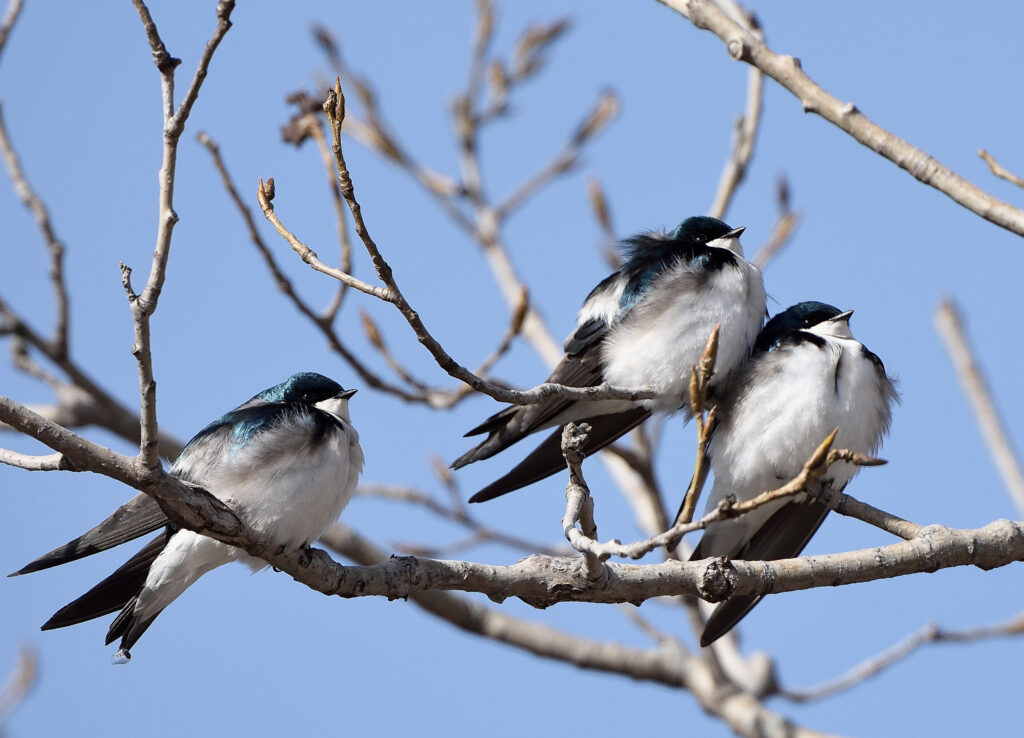
Only a few decades ago, one bird which definitely got us thinking about fall migration though was the TREE SWALLOW. It is this month when numbers of them used to begin collecting on utility wires, especially in areas adjacent to cattail marshes where this species roosted at night. Gone however are the days when there would be thousands of TREE SWALLOWS performing this daily ritual. Their once enormous numbers on utility wires in July and August are but a small fraction of what they once were. No longer do we see the early morning sky dark with TREE SWALLOWS as the emerge from their roosts in cattail marshes and seek out utility wires and even trees in which to perch. Those days are long gone, and it is indeed very sad.
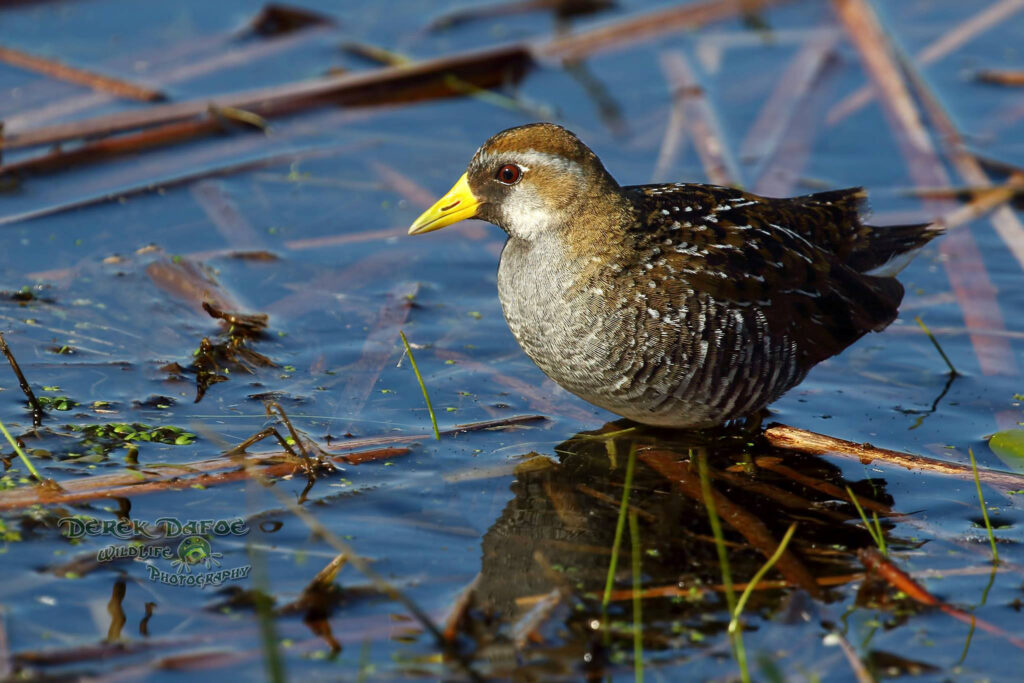
There is still some interesting birding to be had – MALLARDS with young in tow, RUFFED GROUSE giving chase if you should venture too close to their young, the characteristic descending whinny of a hidden SORA in the marsh, the NORTHERN MOCKINGBIRD flying in front of your car – something you hadn’t seen all spring.
While some birds are into their second brood this month, the young of those species which rear but one brood have now left the nest, and, accompanied by their parents, wander about the country. Small flocks of EUROPEAN STARLINGS, COMMON GRACKLES, and BROWN-HEADED COWBIRDS may be seen this month as they scour the countryside for food. We hear the calls of certain young birds who, long after they have left the nest, are still dependent on their parents; thus, the tremulous cries of immature BALTIMORE ORIOLES are characteristic of this month.
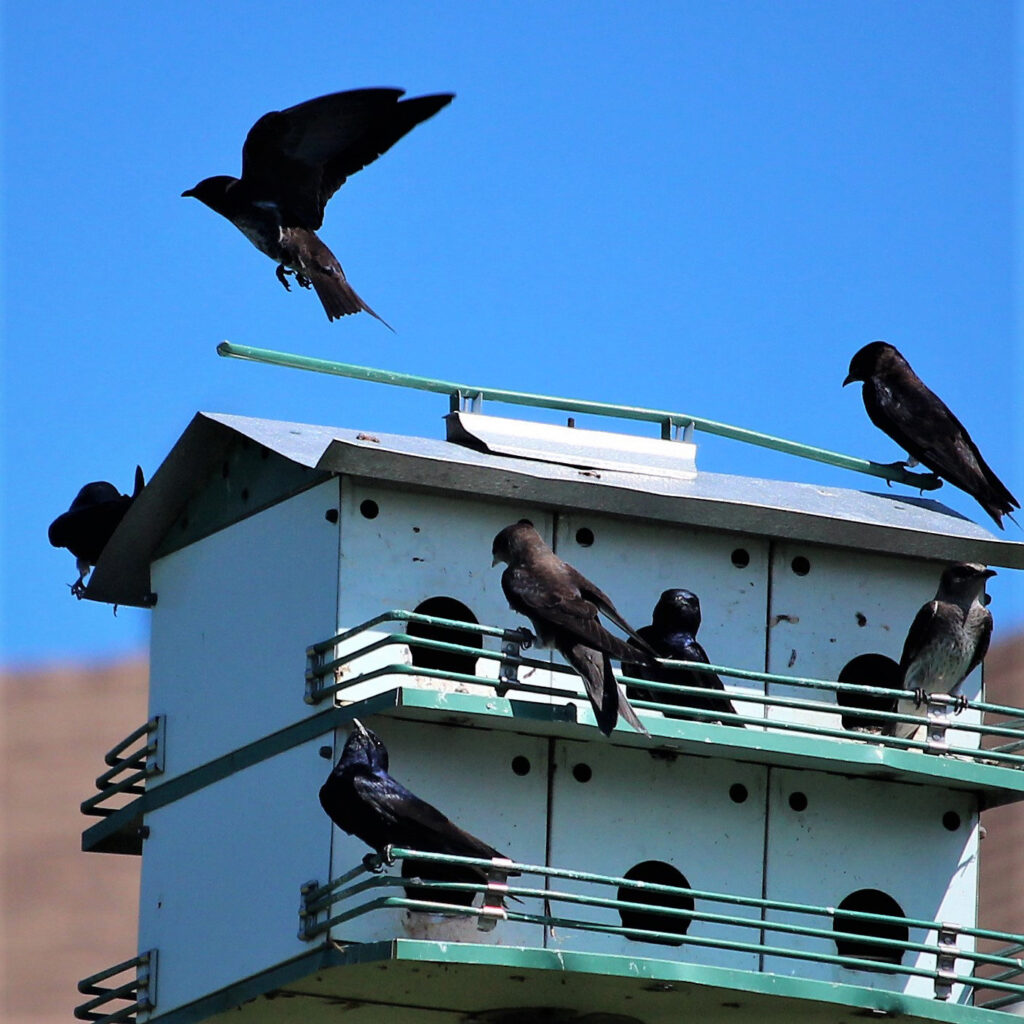
It is also this month when fledged birds might be found that have fallen out of a nest, or have not gained quite enough strength to fly. Leave them alone. Chances are they are not abandoned. The parents of most species will continue to care for their young even if they have fallen. One exception in your backyard is the PURPLE MARTIN; they generally ignore any young that have fallen to the ground. With Purple Martins, it doesn’t really matter which cavity you return the fallen bird to, as this colonial species is so neighbourly, chances are the young bird will be adopted by someone. In fact, this rule of thumb can probably be applied to most birds. If you wish to return a fallen bird to a nest in the interest of the bird’s safety, and are not certain if it’s the right one, the parent bird will respond to the bird’s calls for food no matter where you put it. And forget the old wives’ tale that a parent bird will abandon its young if you touch it. It’s one of the old myths that seems to have clung tenaciously to time. Birds will not “smell” you on their babies or their eggs.